
Trust / Security
Security architecture.
Trust is engineered. This page describes how Quarve is built - identity, isolation, data protection, auditability and operations - as architecture rather than badges. Formal certifications will be published as they are attained.
01 / Posture
Six dimensions of the architecture.
01
Identity & access
- Authenticated sessions for every user of the system.
- Role-based permissions scoped to each organization's structure.
- Action-level control: viewing, changing and approving are distinct rights.
02
Tenant isolation
- Each organization's data is scoped to its own tenant.
- Users act only within the organizations they belong to.
- Platform administration is separated from organizational roles.
03
Data protection
- Traffic is encrypted in transit over TLS.
- Deletion is controlled: records pass through recoverable states before removal.
- Candidate and organizational data is held for the purposes of the system, not resold or repurposed.
04
Auditability
- Requisitions and candidates carry explicit state and ownership.
- Workflow transitions are deliberate, permissioned actions.
- The record of what happened lives in the system, not in inboxes.
05
Integration
- APIs are authenticated and permissioned like the rest of the system.
- Integrations are explicit interfaces, not open side doors.
06
Operations
- Managed cloud deployment operated by the Quarve team.
- Separated environments for development and production.
- Changes reach production through a controlled release process.
Security teams and procurement are welcome to examine Quarve in depth - that is what the system is built for.
Ask a security question →02 / Evidence
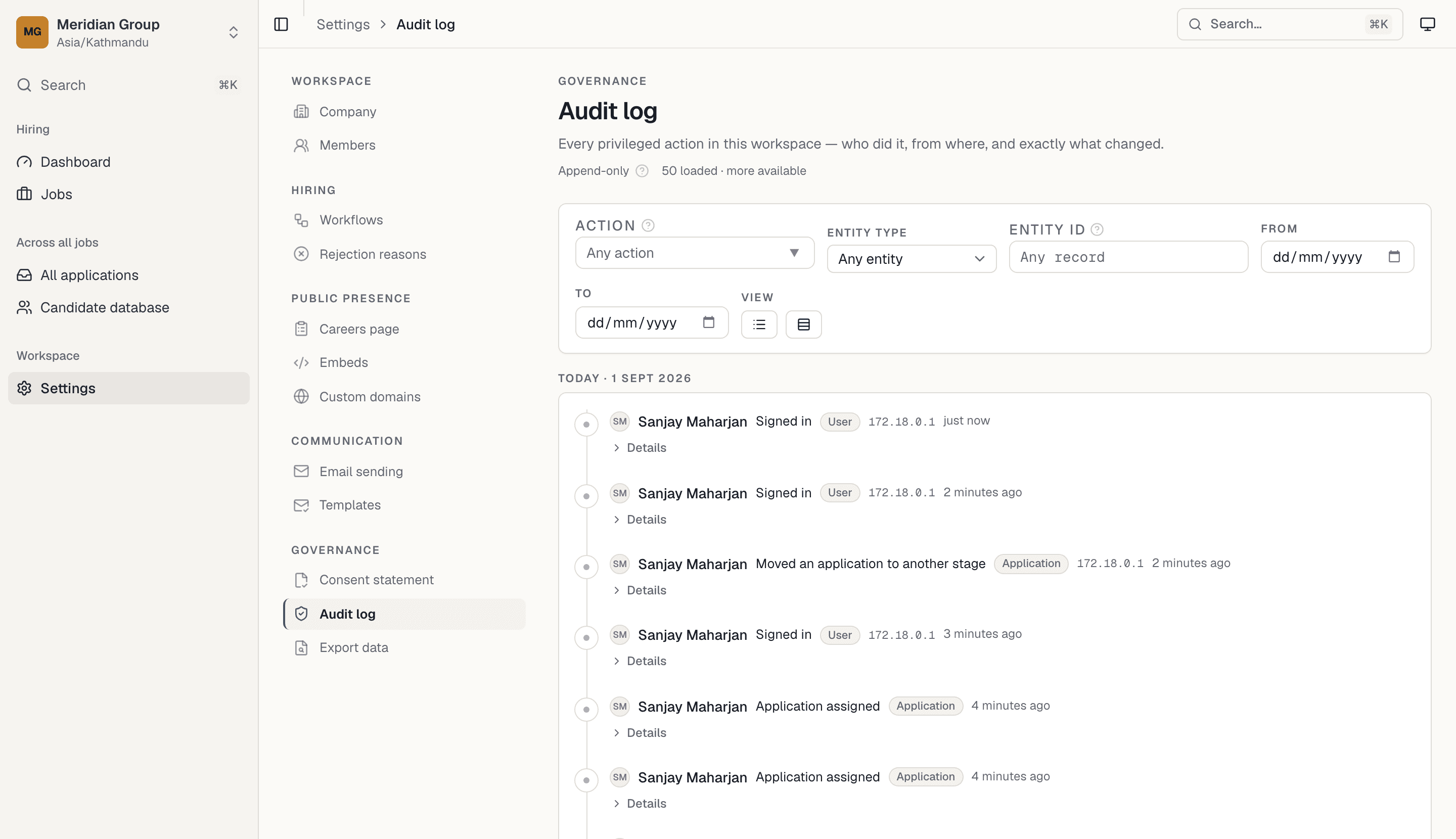
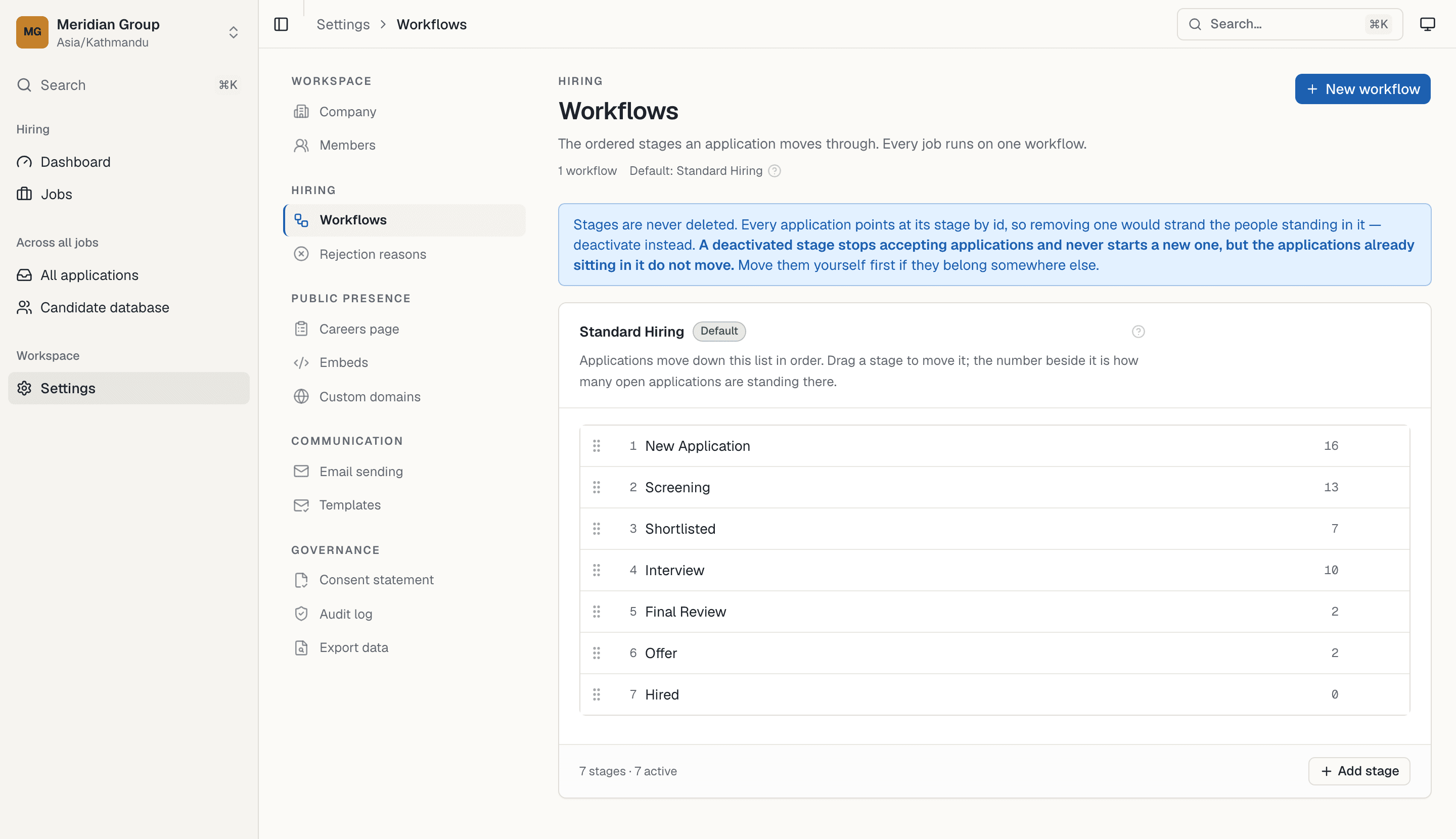
Governance you can see in the product.
Auditability and access control are working features of the interface, not statements on a slide. Captured from the working system.
ats.quarve.app
ats.quarve.app
Next step
Examine Quarve.
A walkthrough covers the system itself: workflows, permissions, evidence, governance and how Quarve ATS is deployed in your organization.